

Gift Personalisation Trends 2025: Step-by-Step Guide
Bold choices in gift personalisation are shaping the way Central European young adults shop for holidays, with the british approach to custom designs quickly gaining influence. More than 60 percent of shoppers now actively seek personalised gifts that reflect both local flair and individual stories. Keeping up with these trends not only makes your gifts more meaningful but also helps you stand out at any holiday celebration. Discover how to turn every present into a true reflection of your thoughtfulness.
Table of Contents
- Step 1: Identify Emerging Gift Personalization Trends
- Step 2: Select The Right Customisation Techniques
- Step 3: Design Unique Personalised Gifts
- Step 4: Incorporate Seasonal And Local Themes
- Step 5: Verify Quality And Personal Touch
Quick Summary
| Main Insight | Clarification |
|---|---|
| 1. Track emerging gift trends | Monitor consumer behaviour to identify unique and emotionally resonant gifting preferences, focusing on personalisation and customisation. |
| 2. Choose impactful customisation techniques | Select methods that resonate emotionally with recipients, enhancing the personal connection, such as engraving or photo integration. |
| 3. Design personalised gifts thoughtfully | Incorporate elements of the recipient’s life, interests, and experiences to create a meaningful connection, utilising advanced design technologies. |
| 4. Infuse seasonal and local themes | Research local customs and seasonal elements to embed cultural significance in gifts, making them more relatable and special for recipients. |
| 5. Ensure quality and authenticity | Conduct thorough quality checks on materials and craftsmanship, ensuring the gift feels authentic and meets emotional expectations before finalising. |
Step 1: Identify emerging gift personalization trends
Understanding emerging gift personalisation trends requires strategic research and keen observation of consumer behaviour. The gift marketplace is rapidly transforming, with consumers increasingly seeking unique, emotionally resonant presents that reflect individual identities.
To effectively track personalization trends, begin by examining current market indicators. Consumer preferences are shifting towards more tailored gifting experiences, moving decisively away from generic, mass-produced offerings. This trend demonstrates a growing desire for gifts that communicate thoughtfulness and personal connection. Key areas to investigate include digital personalisation tools, custom design platforms, and emerging technologies that enable more intricate customisation.
Visual research becomes crucial in this process. Explore design websites, social media platforms, and specialised gift marketplaces to understand emerging aesthetic preferences. Pay attention to demographic variations, noting how different age groups and cultural backgrounds approach personalised gifting. Track popular customisation techniques such as name engraving, photo integration, and thematic design elements that resonate with specific recipient groups.
Advanced tip: Track social media hashtags and trending gift design communities to stay ahead of emerging personalisation movements before they become mainstream consumer trends.
Step 2: Select the right customisation techniques
Choosing the perfect customisation techniques transforms an ordinary gift into a memorable, personalised experience that speaks directly to the recipient. Understanding how to navigate the growing landscape of personalisation options requires strategic thinking and creative insight.
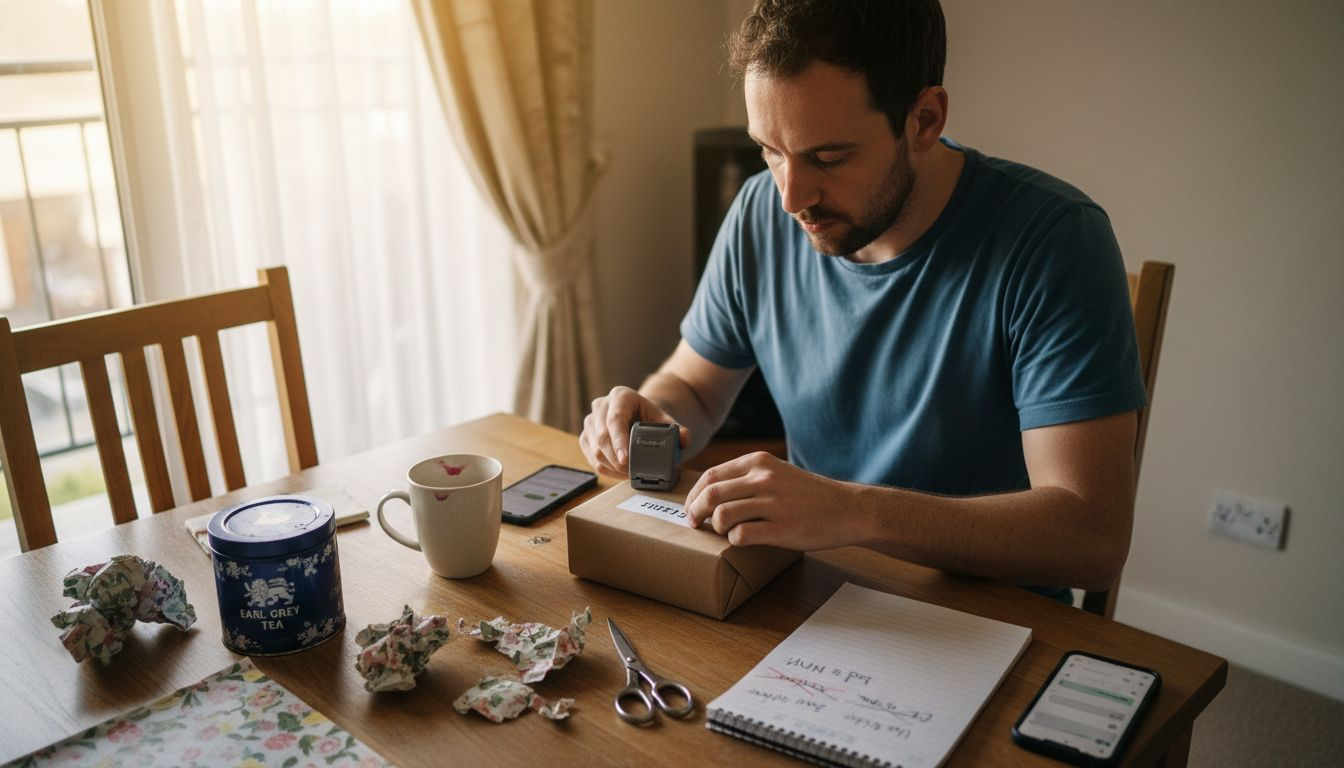
Start by exploring innovative personalisation methods that go beyond traditional approaches. Advanced multi-modal personalisation systems now leverage vision-language models to create more nuanced customisation opportunities, enabling deeper connections between gift creators and recipients. Consider techniques such as digital embroidery, photo integration, laser engraving, and emerging textile technologies that allow for more intricate and meaningful designs.
Evaluate customisation techniques through the lens of recipient preferences and emotional resonance. Different personalisation methods suit various gift types and recipient personalities. For instance, name engraving works beautifully for jewellery, while photo collages might suit commemorative items. Technical innovations like adaptive fabric technologies that enable re-moldable textile systems are expanding the boundaries of what personalisation can achieve, offering unprecedented flexibility in gift design.
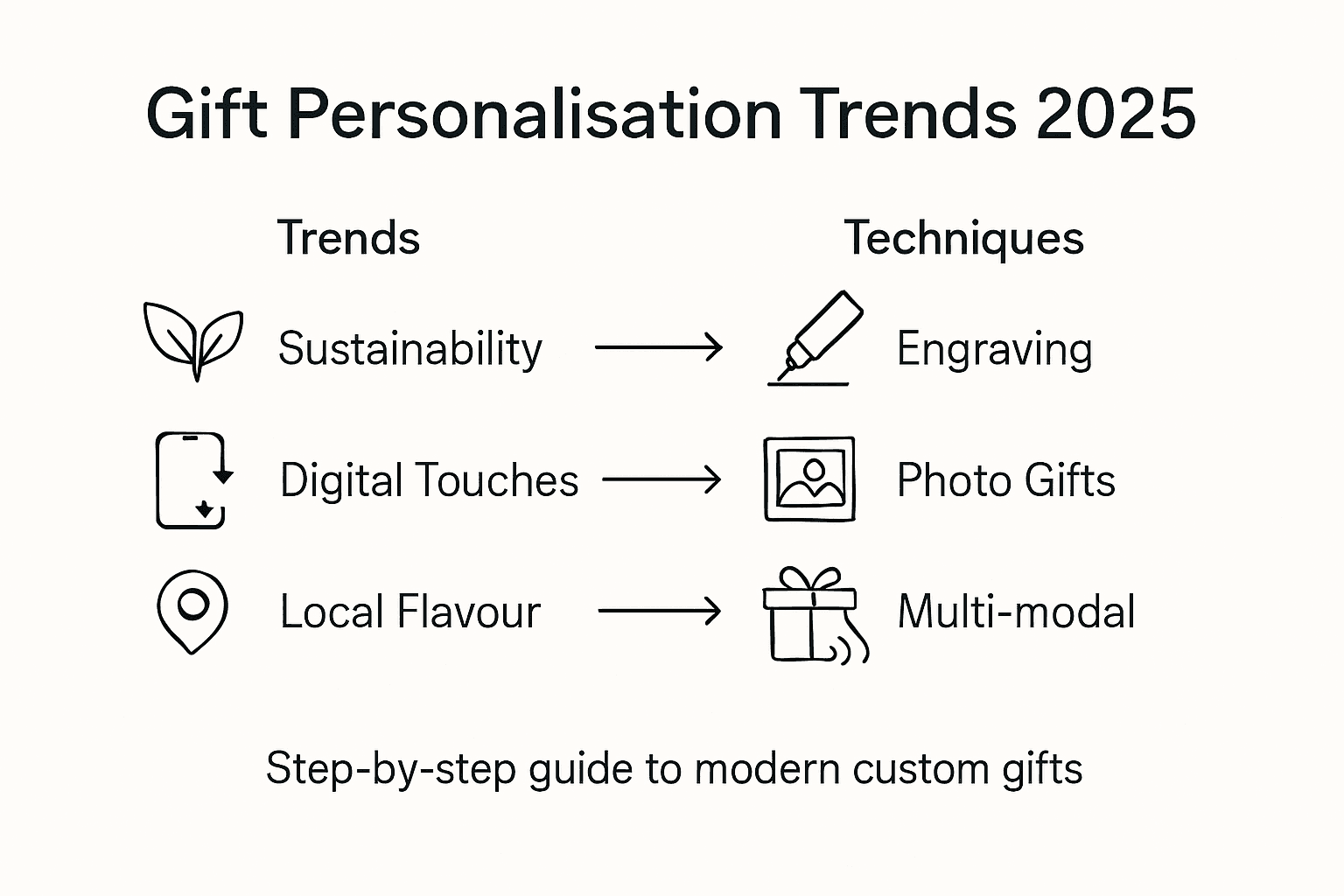
Pro tip: Always test your chosen customisation technique on a sample item first to ensure quality and aesthetic appeal before committing to the final product.
Here is a quick comparison of popular personalisation techniques and their typical uses:
| Personalisation Technique | Best Used For | Key Benefit |
|---|---|---|
| Name Engraving | Jewellery, glassware | Adds exclusivity and ownership |
| Photo Integration | Albums, frames, cushions | Captures personal memories |
| Digital Embroidery | Apparel, home textiles | Provides tactile and visual impact |
| Laser Engraving | Metal, wood, acrylic gifts | Offers detailed, durable customisation |
| Adaptive Fabric Technology | Smart wearables, fashion | Enables interactive experiences |
Step 3: Design unique personalised gifts
Creating a truly memorable personalised gift requires more than just adding a name or initial. It demands a thoughtful approach that transforms an ordinary item into an extraordinary expression of connection and understanding.
Modern design principles emphasise user-centered approaches that integrate digital functionality with emotional significance, offering unprecedented opportunities for creative gift personalisation. Begin by understanding the recipient deeply their interests, personal style, and meaningful life moments. This insight allows you to select personalisation techniques that resonate authentically. Consider incorporating elements like significant dates, geographic coordinates of special locations, or visual representations of shared memories that tell a unique narrative.
Leverage emerging technologies to elevate your personalisation strategy. Innovative design frameworks now integrate generative artificial intelligence and augmented reality to create adaptive, intelligent personalisation experiences, enabling more sophisticated and meaningful gift design. Explore digital platforms that offer advanced customisation tools, allowing you to experiment with typography, colour palettes, and layered design elements that reflect the recipient’s personality. Whether creating a photo album, custom artwork, or personalised accessory, focus on creating an emotional connection that transcends the physical object.
Pro tip: Always preview your design from multiple perspectives and request a digital mockup before finalising to ensure the personalisation feels genuine and aesthetically harmonious.
Step 4: Incorporate seasonal and local themes
Creating a personalised gift that resonates with seasonal and local nuances transforms an ordinary present into a meaningful cultural experience. Understanding how to weave local traditions and seasonal elements into your gift design requires creativity and thoughtful research.
Personalised gifts have increasingly expanded to include seasonal items that reflect local celebrations and traditions, offering an opportunity to connect more deeply with the recipient. Begin by researching specific seasonal events and local customs that hold significance for your gift recipient. This might involve exploring regional festivals, traditional colour palettes, or cultural symbols that carry emotional weight. Consider how different seasons impact gift design perhaps incorporating autumnal warmth for a winter gift or spring botanical elements for a graduation present.
The emerging trend towards experiential gifting highlights the importance of creating presents that offer memorable moments rather than simply physical objects. Explore ways to integrate local experiences into your gift concept. This could mean including local artisan craftsmanship, referencing regional landmarks, or designing a gift that tells a story unique to a specific geographical context. For instance, a gift for someone from Edinburgh might incorporate subtle tartan patterns, while a present for someone from Cornwall could reference maritime themes.
Pro tip: Research local cultural calendars and spend time understanding regional symbolism to ensure your personalised gift feels authentic and genuinely connected to the recipient’s background.
Step 5: Verify quality and personal touch
Ensuring the quality and authenticity of a personalised gift requires meticulous attention to detail and a discerning eye for craftsmanship. This final verification step transforms a well intentioned gift into a truly memorable keepsake.
The intersection of technology and craftsmanship has become crucial in creating personalised gifts that offer both authenticity and artistic integrity, highlighting the importance of carefully examining each element of your chosen gift. Start by conducting a comprehensive quality assessment that goes beyond surface level aesthetics. Examine the materials used, the precision of personalisation techniques, and the overall durability of the item. Pay close attention to details such as stitching, printing clarity, material texture, and the seamless integration of personalised elements.
Sustainability and environmental responsibility have become key considerations in creating high quality personalised gifts, adding another layer to your verification process. Request detailed information about the production methods, materials sourcing, and environmental impact of your chosen gift. Look for artisan techniques that demonstrate genuine craftsmanship digital personalisation should complement rather than replace the human touch. Consider requesting a sample or digital proof to verify that the personalisation meets your emotional and aesthetic expectations before final production.
Pro tip: Always request a high resolution preview or physical sample and examine it under different lighting conditions to ensure the personalisation looks perfect from every angle.
The following table summarises key factors to consider when verifying the quality of a personalised gift:
| Quality Factor | What to Examine | Why It Matters |
|---|---|---|
| Material Integrity | Durability, texture, finish | Ensures longevity and appeal |
| Craftsmanship | Precision, alignment, details | Reflects authenticity |
| Personalisation Clarity | Sharpness, readability | Enhances emotional impact |
| Sustainability | Sourcing, eco-friendly moves | Reduces environmental impact |
| Digital Preview | Realistic, multi-angle views | Confirms personal touch |
Discover the Future of Personalised Gifting with Heartful.gifts
Navigating the evolving landscape of gift personalisation can be challenging. The article highlights critical pain points such as selecting the right customisation techniques, incorporating seasonal and local themes, and ensuring quality and emotional resonance. At Heartful.gifts, we understand your desire to find unique, thoughtful presents that truly connect with your loved ones through precise, heartfelt personalisation. Our platform specialises in customised phone cases featuring cityscapes, collages, and more, crafted to reflect individual stories and preferences while perfectly fitting the seasonal moments you treasure.
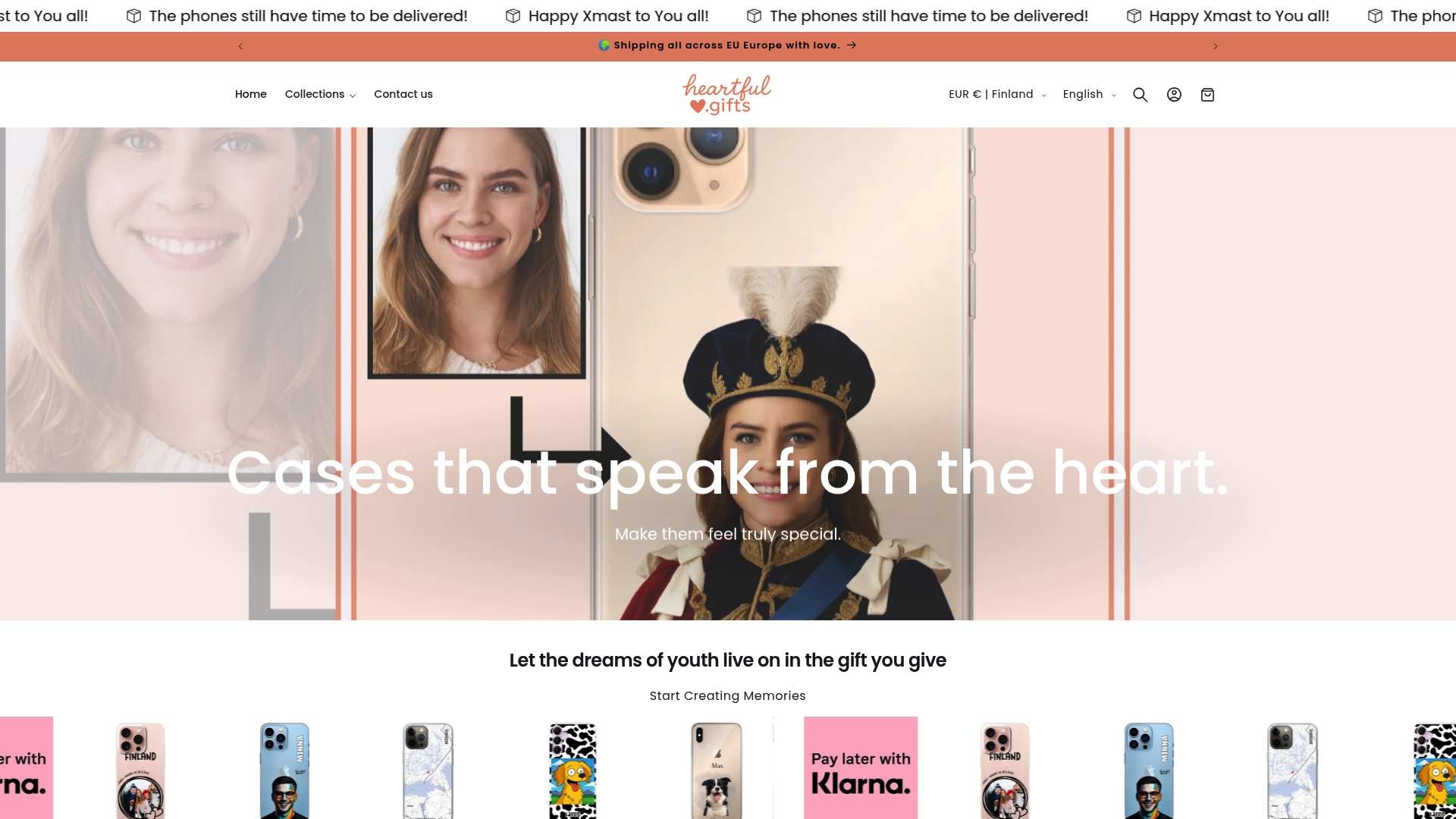
Make your gifting experience seamless and meaningful with Heartful.gifts. Explore our diverse product options and enjoy quick shipping across the European Union. Visit Heartful.gifts now to start designing a personalised gift that captures your special connection. Embrace the latest gift personalisation trends and create memories that last a lifetime by choosing tailored, high-quality gifts made just for them.
Browse the collection today and bring your thoughtful ideas to life with effortless customisation at Heartful.gifts.
Frequently Asked Questions
How can I identify emerging gift personalisation trends for 2025?
Understanding emerging gift personalisation trends requires strategic research and observation of consumer behaviour. Start by examining market indicators and consumer preferences, focusing on shifts towards more tailored gifting experiences. Use social media hashtags and trending design communities to stay informed about new movements in personalisation.
What are some effective customisation techniques for personalised gifts?
Effective customisation techniques include name engraving, photo integration, and digital embroidery, each suited for specific gift types and recipient preferences. Explore advanced options such as laser engraving and adaptive fabric technologies to create unique and meaningful designs. Test your chosen technique on a sample item first to ensure quality before the final product.
How do I design unique personalised gifts that resonate emotionally?
To design unique personalised gifts, focus on the recipient’s interests, personal style, and significant life moments. Incorporate meaningful elements such as significant dates or shared memories to create a narrative. Always preview your design and request a digital mockup to ensure it feels authentic and visually appealing.
How can I incorporate seasonal and local themes into my personalised gifts?
Incorporating seasonal and local themes requires research into specific customs and traditions meaningful to the recipient. Consider integrating local artisan craftsmanship or seasonal motifs to enhance the gift’s significance. Be sure to connect these elements authentically to the recipient’s background to add emotional value.
What quality factors should I verify before finalising a personalised gift?
Before finalising a personalised gift, verify factors such as material integrity, craftsmanship, and the clarity of personalisation. Conduct a thorough quality assessment and look for signs of genuine craftsmanship, paying attention to details like stitching and finish. Always request a high-resolution preview or sample to confirm it meets your expectations before production.
Recommended
- Enchant Your Loved Ones with the Perfect Personalized Engagement Gift – heartful.gifts
- Enchant Your Loved Ones with the Perfect Personalized Engagement Gift – heartful.gifts
- Creative Custom Wedding Gift Ideas to Wow Every Couple – heartful.gifts
- Creative Custom Wedding Gift Ideas to Wow Every Couple – heartful.gifts